Custom builds, major remodels, and subdivision homes come with their own set of rules. When you’re building a high-end home, every system and finish must flow with the site, raising the stakes and taking decision-making to a whole new level.
Below, we look at what sets a luxury build apart from a standard construction project. We also cover what drives custom build costs in Denver, and how to select a builder who can carry a complex project through to the finish line.
What Sets a High-End Custom Build Apart
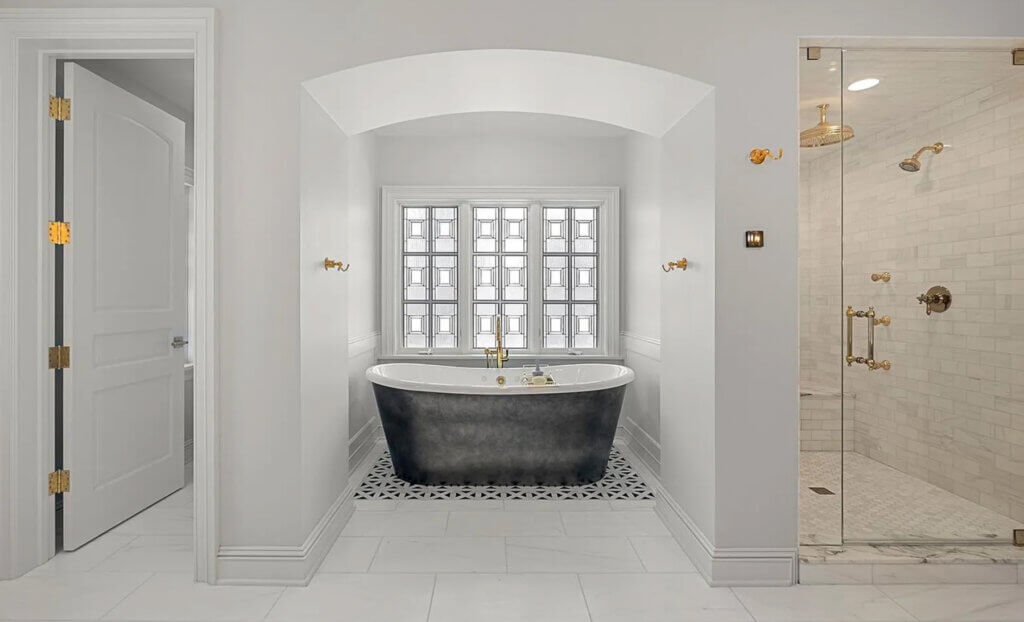
A standard build gives you a solid home. A custom build gives you a home designed around how you actually live, down to the details most people don’t think about until they see them in someone else’s space.
You usually see it in the infrastructure first. An integrated low-voltage package handles automated shades, audio, and climate control, while custom millwork replaces stock cabinetry and stone selections move beyond standard allowances.
Those upgrades typically add $100 to $200 per square foot over a standard build. On the true luxury end, a 10,000-square-foot project can cost between $7 million and $10 million once you factor in land, architecture, and full custom finishes.
That’s a wide range, but you’re in control. Every system, finish, and detail exists because you intentionally chose it.
The Design-Build Advantage for Complex Projects
Custom builds have far more moving parts than a remodel. Architectural design must align with structural engineering, while site prep and permitting must both be cleared before contractors get to work.
Then you add in the finish selections. When design and construction come from separate firms, cost surprises usually pop up once a builder finally sees the drawings and prices them out.
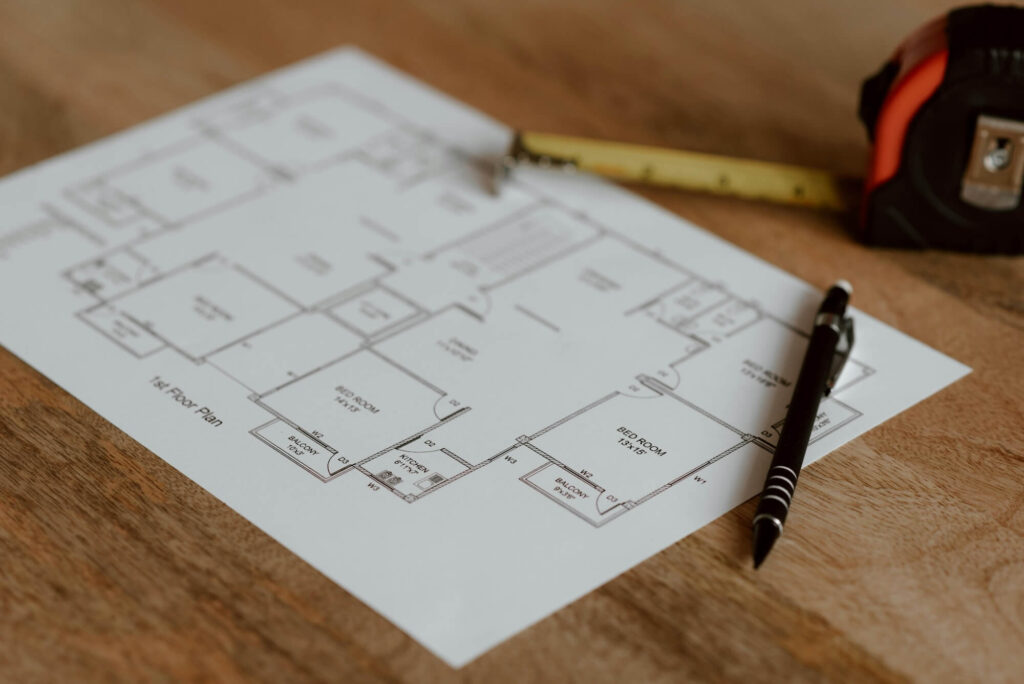
An integrated design-build approach keeps design and budget connected. Our in-house design team works alongside the build crew throughout the process, ensuring the floor plan isn’t finalized until we know what it costs to build and how it will perform on your lot.
It also eliminates the friction of endless handoffs. The team drawing your home is in direct communication with the team building it, so decisions keep moving in real time.
On a high-end project where custom details give you more decisions to make, that alignment protects the budget from start to finish. It’s also what makes a complex lot workable. Structural engineers, architects, and field managers solve site challenges together long before they can become costly surprises during framing.
What Drives Cost at the High End
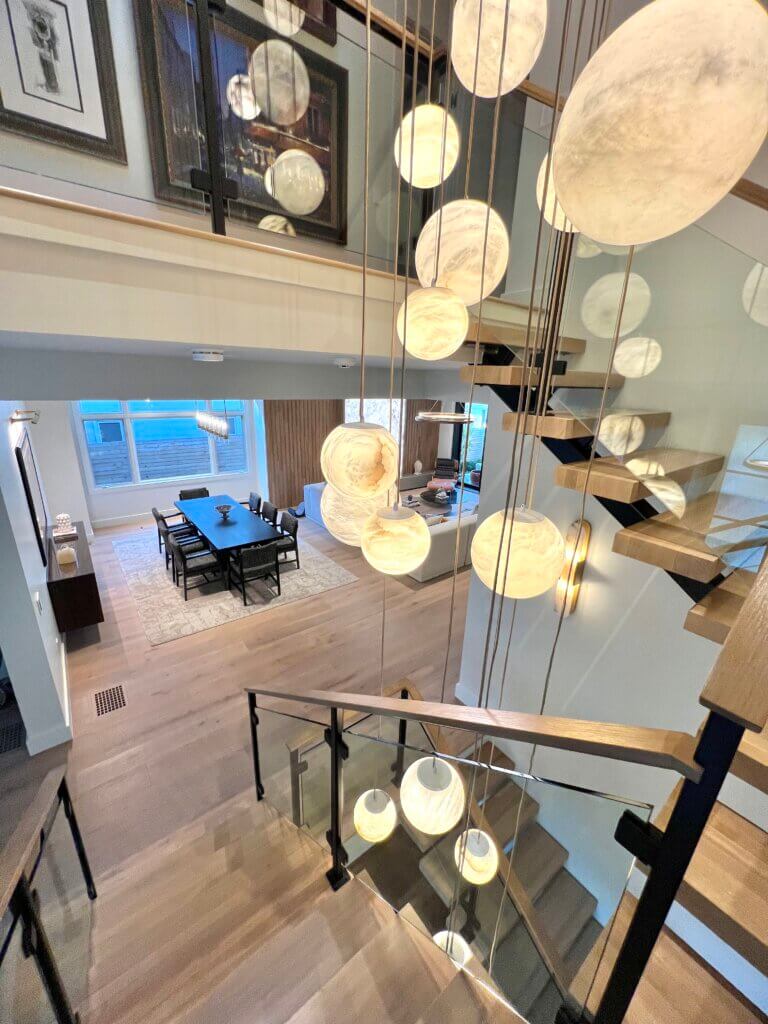
Every custom build starts with basic square-footage calculations. From there, the site, design complexity, and finish level dictate the final cost.
New custom construction in Denver currently starts around $450 per square foot, which puts a standard 3,000-square-foot home in the $1.35 million to $1.4 million range to build, excluding land. A 5,000-square-foot build is closer to $2.25 million at that same base tier.
Costs scale quickly from there—whole-home automation, architectural staircases, integrated stone, and complex structural engineering drive up the budget.
Beyond finishes, the site itself drives a massive part of the budget. A flat, clear lot in a newer development costs less to build on than a sloped parcel in an established neighborhood. When you’re dealing with mature trees, tight property setbacks, and aging utility lines, you’ll need extra time and capital before framing begins.
Before you fall in love with a piece of land, bring a builder in to evaluate it. A site challenge that looks simple on a survey can burn through tens of thousands of dollars in site prep before you even pour the footers.
Choosing the Right Lot in Denver's Established Neighborhoods
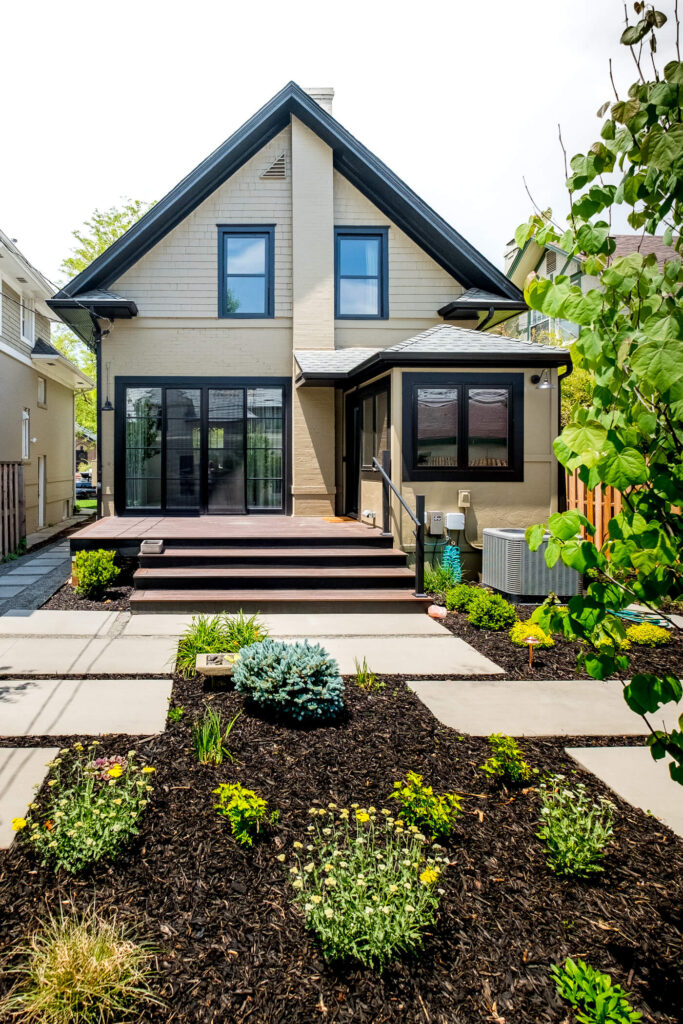
Most luxury custom builds in Denver start with a teardown. In neighborhoods like Cherry Creek, Wash Park, or Cherry Hills Village, raw dirt is practically nonexistent, which changes the engineering process.
Cherry Creek and Wash Park come with tight footprints, strict setbacks, and design review boards that scrutinize every inch of height. Cherry Hills Village is a little different with larger parcels and fewer density caps, but often needs more infrastructure and dirt work to get the site buildable.
Running a zoning and site evaluation before you draw plans keeps height limits, tree protection rules, and strict setbacks from scrapping an expensive design down the road.
Timeline Expectations
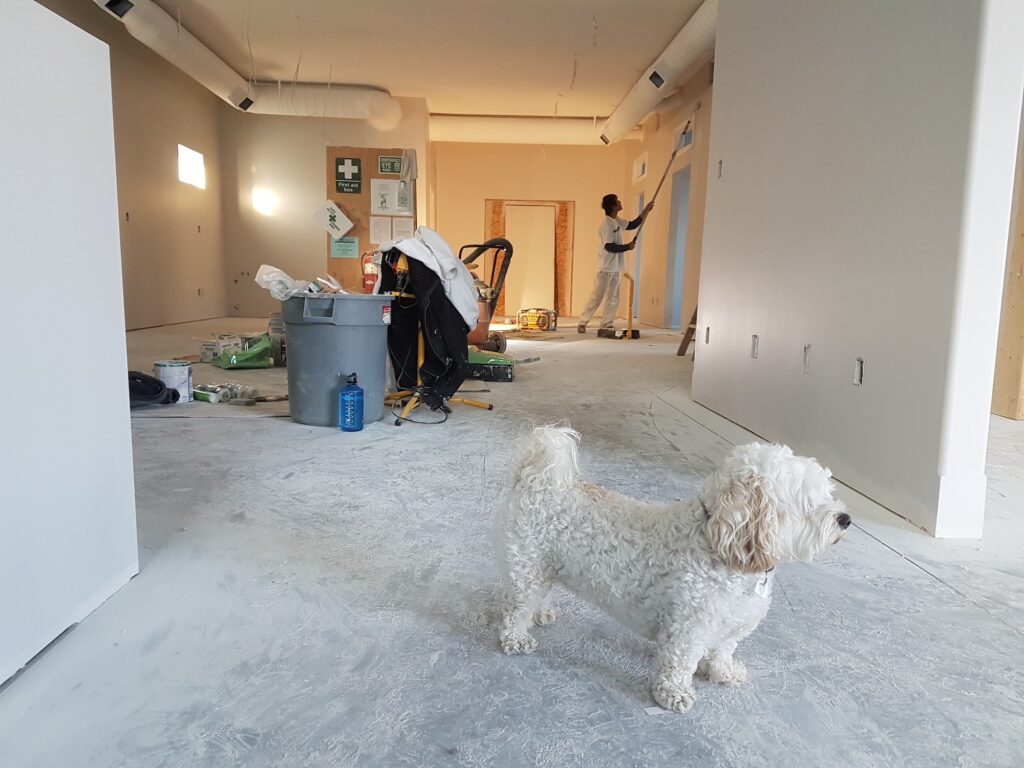
A custom build takes time, and you burn through much of that timeline before the excavators are on site. Design, structural engineering, and permitting typically take several months, sometimes longer if you have complex structural conditions, custom rooflines, or a neighborhood design review board.
Once construction starts, expect 10 to 12 months for a standard custom build, and 18 to 24 months for a home over 5,000 square feet. Weather, long-lead items like custom windows or stone, and structural complexity all dictate the pace.
The smoothest builds happen when homeowners lock in design and finish decisions early—well before framing starts and changes impact the schedule.
Choosing a Builder Who Can Execute Your Vision
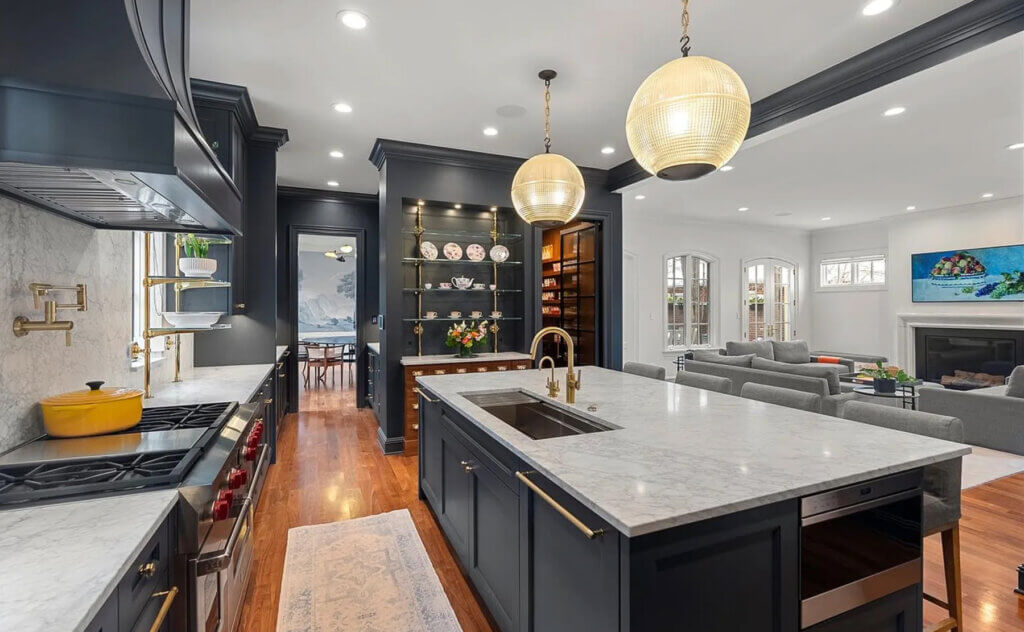
A high-end custom home is one of the largest investments you’ll ever make. The builder you choose will make the process feel like either a partnership or a series of surprises.
Look for a project portfolio that includes full custom builds at the scope and finish level you’re picturing, in neighborhoods with the same site challenges you face. Ask how they handle cost transparency and who your single point of contact will be. And find out how the design and construction teams communicate throughout the build.
At Truth Design Build, we create custom homes across Denver’s established neighborhoods, from Cherry Creek to Cherry Hills Village, with design and construction under one roof.
If you’re thinking about building a custom home and want a clear idea of cost, timeline, and process before you commit to a lot, reach out and let’s talk through your vision.